To continue the spirit of the National Day of Truth and Reconciliation and embrace the Thanksgiving festival with sincere appreciation for Indigenous peoples, School Age 2 engaged in a series of exploration activities focused on Indigenous cultures. Our centre recognizes the traditional territory of the Haudenosaunee, Anishinaabe, and Chonnonton peoples.
The children started the land acknowledgment using information cards about the three communities. One of the cards featured a real picture of people performing a powwow dance in traditional Indigenous regalia. We displayed these cards alongside several books about the Indigenous community. The children were most interested in the story titled, On Powwow Day, even though the book's content is simple. It is a classic book about an important festival in the Indigenous community. For the first time, the children were able to connect the book's content with a real photograph and more factual information. These connections helped them understand the Indigenous culture in a much deeper way.
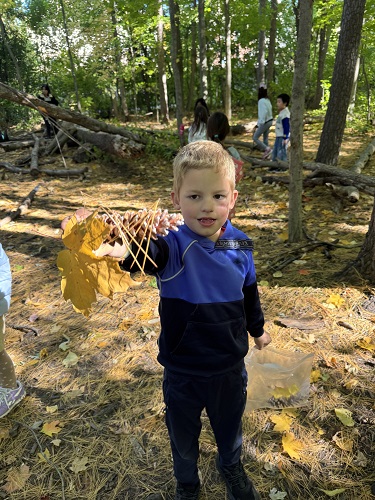
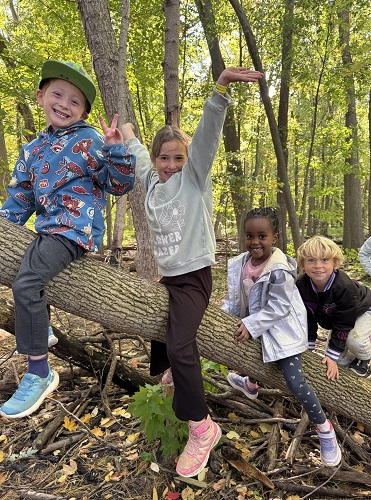
After that, the children explored one of the important natural areas in Millen Woods, creating tangible connections between the information on paper and the real environment. The children initiated a lot of spontaneous activities. We prepared two bags for natural collections, and the children worked together to gather items they wanted to bring back to the centre. Two friends held the bags while others picked up items, negotiating with each other during the selection process.
One child said: “I don’t think this can fit in the bag. It’s too big to take to the room.” The other agreed and said: “I can go find a smaller one.” The first accepted the idea: “Yes, I think the small one is easier to carry.” This simple collection activity supported the children in practicing essential cooperation and communication skills.
Besides that, they gained a sense of pride when discovering things in nature. One friend announced with excitement: “Look, there’s tree sap!” That immediately drew a bunch of children over for a closer look. “It’s real sap!” some children yelled happily. Seeing the real thing filled a blank space in knowledge that usually comes from media.
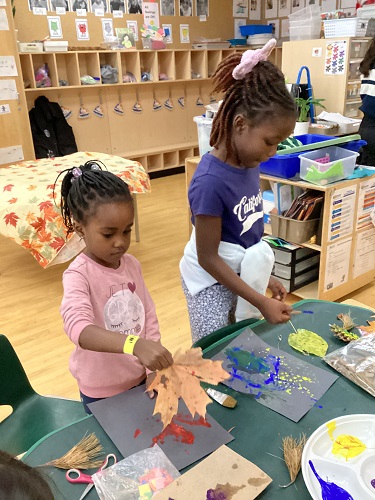
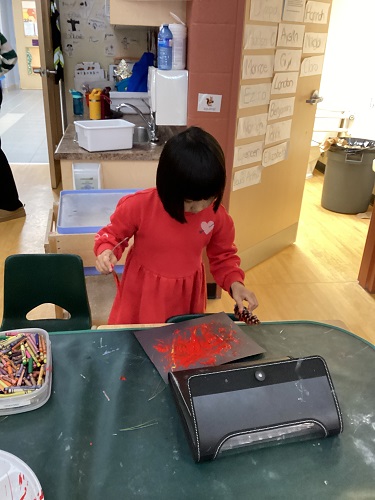
When we returned to the centre, the children asked what they could do with their collections. We set out painting tools and paper at the craft table and encouraged them to try whatever popped into their minds. The children immediately started creating. Some put paint on needle leaves and brushed them onto the paper; some used maple leaves to make prints; others painted pinecones with bright colors and rolled them across the paper. As a result, they produced wonderful art pieces, including colorful paintings and painted pinecones.
Reflecting on these experiences, we realize how much the children benefit from hands-on, multi-sensory learning. Moving forward, we plan to ask for their ideas on what other natural or recycled materials they would like to incorporate into their art. We cannot wait to see what amazing creations they will bring to life as we continue exploring and learning together.