
The arrival of spring invited many opportunities for outdoor exploration and sensory-rich learning experiences. The preschoolers eagerly participated in activities such as water play, bubble stations, sandbox treasure hunts, bike riding, soccer games, chalk art, and nature walks. These experiences encouraged the children to explore their environment using all of their senses while supporting physical development, creativity, and cooperative play.
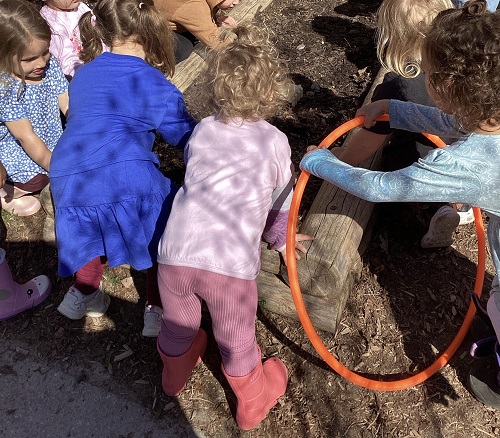 As the weather became warmer, the children showed great interest in gardening and planting. During group discussions, they shared prior knowledge and personal experiences about fruits, vegetables, and gardening with their families. Serena shared, “I like all the vegetables, but my favorite ones are apples and strawberries,” while Kobe proudly explained, “I have a tall plant in my backyard and it flies over the fence.” Penelope added, “I like cucumbers, strawberries, apples, and oranges.” These conversations highlighted the children’s ability to connect learning experiences from home to the classroom environment, strengthening their sense of identity and belonging.
The children enthusiastically participated in planting seeds in the garden, demonstrating patience, responsibility, and care for living things. Through this hands-on experience, they explored concepts related to growth, change, and the im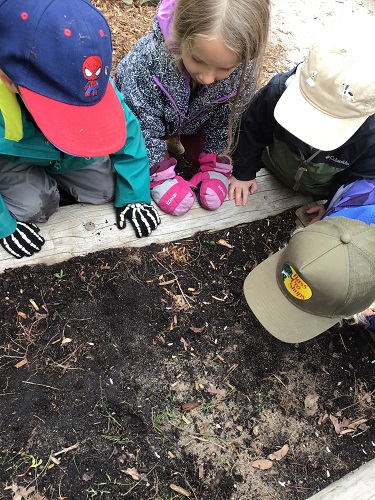 portance of caring for the environment. The gardening experience also supported collaborative learning as the children worked together, shared tools, and observed changes in the garden over time.
As flowers began to bloom outdoors, the children’s curiosity naturally expanded toward investigating plants and flowers. To extend their learning, serviceberry flowers were introduced for close observation using magnifying glasses and tweezers. Lyle carefully explored the flower and excitedly announced, “I found the middle!” Lily observed, “Mine looked like it had a bug on it.” Another child explored the flowers through touch by crumpling the petals in her hands. These moments reflected the children’s emerging inquiry skills as they used observation, comparison, and sensory exploration to make discoveries about the natural world. Conversations about how flowers grow and how rain supports plant life encouraged the children to think about connections within nature.
The children’s investigations soon expanded to worms and insects found in the playground environment. Their thoughtful questions, including “Why do bugs crawl?” and “Why do ladybugs bite?” demonstrated their growing curiosity and desire to understand living creatures. The children eagerly searched for worms outdoors, gathering containers to create temporary homes for them. Chloe lovingly named one worm family, saying, “This is Dani and his baby worm,” while Bernadette thoughtfully suggested, “Keep daddy worm and baby worm together so they will be happy.” These interactions highlighted the children’s empathy, imagination, and understanding of relationships within living systems. Owen’s question about why worms crawl instead of fly opened opportunities for scientific thinking and meaningful discussion about how different creatures move and survive in their environments.
Nature walks throughout the neighborhood became another important extension of the children’s learning. The children carefully observed the world around them, collecting sticks, feathers, leaves, flowers, and rocks to bring back for further exploration in the classroom. Their thoughtful questions reflected their growing awareness of the environment. Chloe wondered, “Why is the sky blue?” while Serena observed, “When it’s raining, the sky gets cloudy.” These moments demonstrated the children’s ability to make observations, form theories, and engage in collaborative conversations about the world around them.
Creative expression also flourished outdoors through sidewalk chalk painting and water painting activities. The children explored colour, shapes, and early literacy skills while engaging in large-scale creative experiences. They proudly practiced recognizing and writing the letters in their names on the playground chalkboards. One memorable moment occurred when Cole wrote the letter “C” and proudly exclaimed, “My name starts with the letter C!” This experience reflected the children’s growing confidence and understanding of literacy concepts through play-based learning.
Through these rich outdoor experiences, the children demonstrated curiosity, creativity, collaboration, and a strong connection to nature. Their questions, conversations, and investigations reflected meaningful learning that emerged naturally through play, exploration, and shared experiences within the outdoor environment.
It all means the outdoor environment supports their meaningful learning experience that supports their curiosity, inquiry, creativity and sense of belonging and they develop a deeper understanding of the natural world while strengthening their communication, problem-solving and social emotional skills.
Our next steps will be going on a walk frequently observing, investigating demonstrating their growing ability to think critically, making connection and expressing wonder about the environment.