February has been a fun and engaging month filled with exciting activities, meaningful conversations, and new discoveries for our School Age 1 friends. In recognition of Black History Month, the children explored the importance of learning about history through videos, stories, and discussions that highlighted different diverse cultures and experiences. As we explored our learning, we focused on one individual whose story shows how creativity and perseverance can make a lasting impact: George Crum, also known as George Speck. George Crum was a talented African American chef from Saratoga County, New York, best known for helping create one of the world’s most popular snacks—potato chips. When a restaurant customer complained that their potatoes were sliced too thick and not crunchy enough, George Crum responded with creativity by slicing them very thin, frying them until crisp, and adding salt. The result was a huge success, and potato chips quickly became a favorite. He later opened his own restaurant, placing baskets of potato chips on every table for guests to enjoy.
George Crum’s story goes beyond food. Living during a time when opportunities for African Americans were limited, he demonstrated confidence, pride, and innovation. His story reminds children that great ideas can come from anyone and that even small moments can lead to big, lasting changes. Through learning about George Crum and other influential figures such as Martin Luther King Jr., Rosa Parks, Ruby Bridges, Garrett Morgan, and Mae Jemison, children begin to understand that background or ethnicity does not limit a person’s ability to make a difference. These individuals help teach important lessons about equality, perseverance, creativity, and confidence while also helping children develop empathy, respect, and a deeper appreciation for diversity.
Learning about Black History Month helps children build a more complete and accurate understanding of history—one that includes the voices, struggles, and achievements of Black Americans. It also opens meaningful conversations about equality, fairness, and kindness, encouraging children to reflect on how they treat others and how they can contribute positively to their world. Through open-ended learning, children are also invited to explore their own identities and cultures, fostering pride in who they are while respecting and celebrating the uniqueness of others.
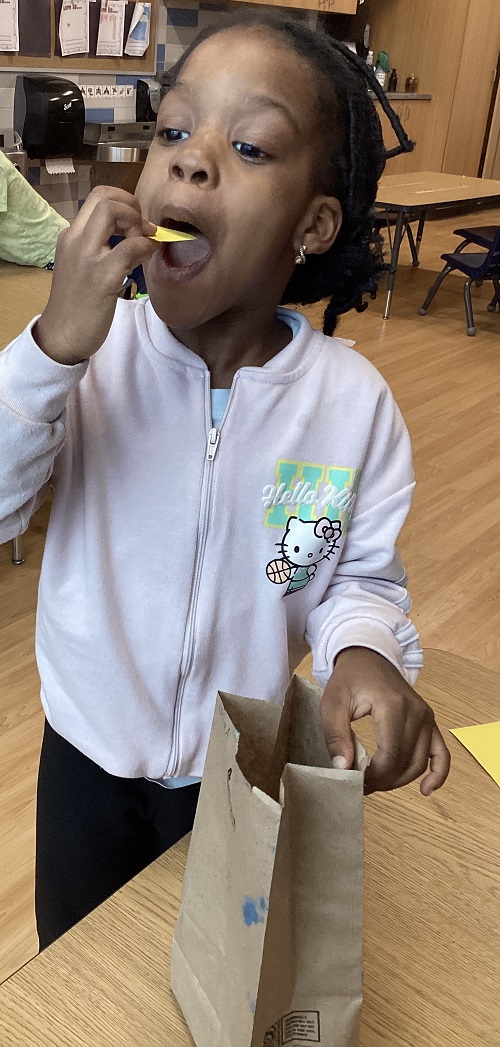
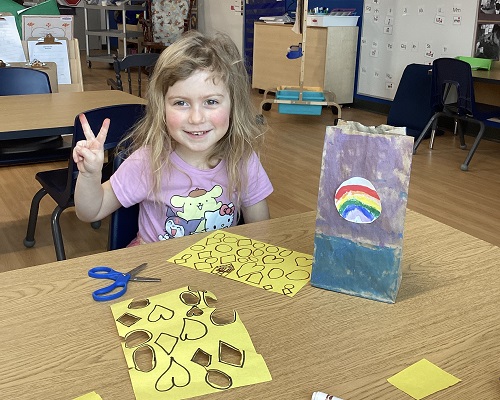
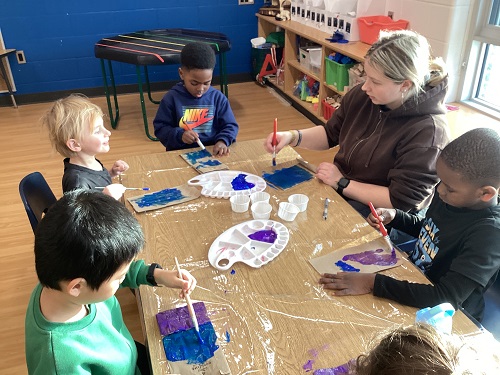
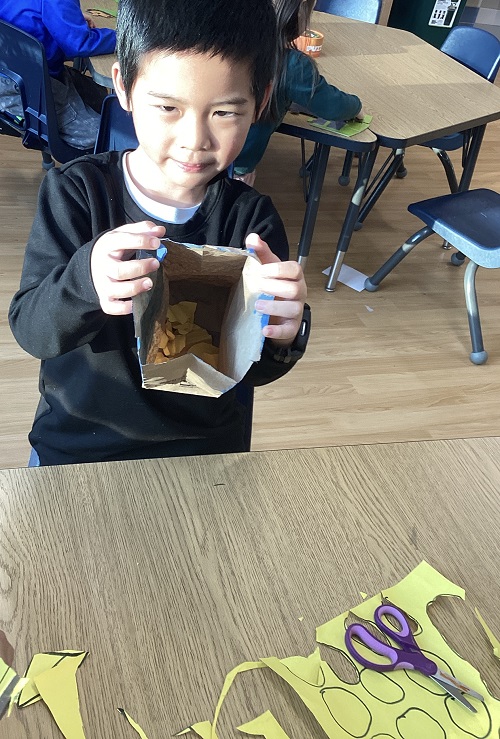
This activity with our School Age 1 group supported the development of creativity, fine motor skills, and innovative thinking. The children engaged in designing and creating their own chips and chip bags, using imaginative techniques and creative problem-solving throughout the process. They explored a variety of colours, shapes, and materials, as well as different methods of cutting, folding, and printing, demonstrating curiosity and purposeful engagement.
Through this exploration, the children recreated their own versions of chip bags, including personalized logos and designs. Some children chose to fold their chip pieces to represent a more realistic, ruffled appearance. The activity extended beyond the art experience and naturally transitioned into imaginative and dramatic play. Several children pretended to sell their chips in a grocery store setting using the classroom cash register, while others assumed roles such as George Crum himself, the inventor of chips or the unhappy customer who did not like how his potatoes were cut.
Overall, this activity demonstrated a range of play experiences and learning outcomes. While some children focused primarily on the creative art component, others expanded the activity into role-play scenarios initiated and led by the children, resulting in a collaborative and immersive play experience!