The Lunar New Year is on the way this month, which is the biggest festival for many people in the world. To introduce the children to what it is and how people celebrate it, the educators planned many engaging activities.
We started with some related books. The children learned many things about Lunar New Year from the books, and these stirred their curiosity into digging things beyond the books. What they were most interested was the twelve animals, also called zodiacs, for each year. They wondered what their own zodiacs were, as well as their peers and the educators in the room. Some children checked the zodiacs and asked around the room about their friends’ birth years. We learned that some children were confused about the difference between their birth year and birthday; when being asked about their birth year, they told their birthdays. In that case, the educators helped them distinguished the concept of each and helped find their birth year in their file. The children’s curiosity led the learning to somewhere unexpected but beneficial.
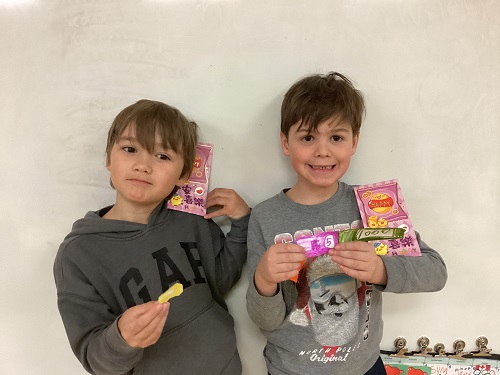
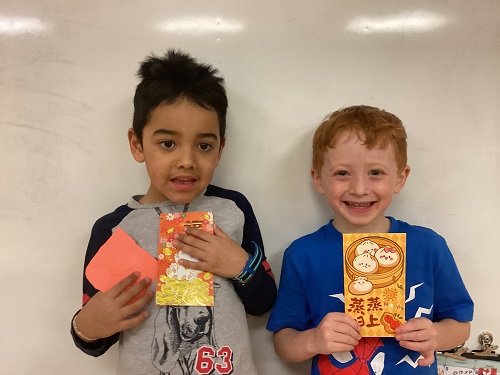
To embracing their curiosity and motivation in learning about different cultures, the educators purchased some money envelopes with meaningful designs, and printed specimens of the money from different countries, including the local Canadian dollar, Japanese yen, Mexican peso, Chinese yuan, Indian rupee, Philippine peso, South Korean won, Ukrainian hryvnia, and Nigerian naira. The children had a fun quiz on guessing which country the money belong to. Those children with multi-cultural backgrounds found the money from their countries showed excitement and pride; some even cheered with their hands waving in the air when they heard the country’s names. This activity not only enhanced the children’s sense of belonging, but also led them to explore different cultures through the recognition of different money. After that, they were encouraged to create their own money and put them into the prepared money envelopes. Some children designed their money based on the specimens by drawing little people on the money, while others drew buildings like found on euros.
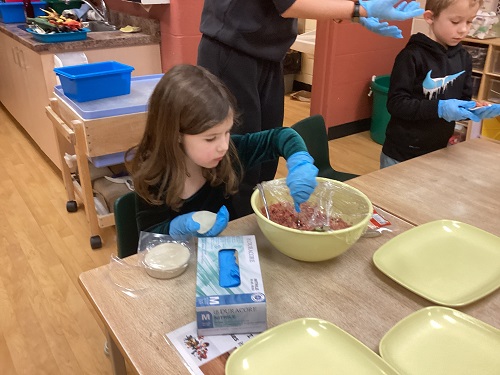
The children were next introduced to the most typical Chinese food: the dumpling (also called Jiaozi). This activity was divided into two parts. The first day, the children were led to make their own dumplings. Before getting their hands covered with flour and raw meat, they watched a video on how to wrap dumplings. Their curiosity was heightened and couldn’t wait to try it. After that, they were grouped together and watched an in-person demonstration provided by an educator. Most of their first tries were stuck in the movement of wrapping, and they had to ask for help. That did not reduce their enthusiasm; instead they asked to practice in order to perfect the concept. The successful dumplings enhanced their confidence to try and even led them to help their peers when needed.
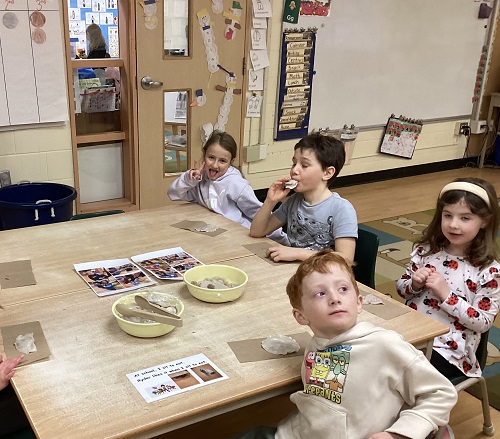
Their excitement continued the next day for tasting their self-made dumplings. They discovered how they felt about the new food; some of them liked it and some not. There were some strong comments on the new food but with some gentle guidance, the children learned how to make respectful expressions when trying new foods from different cultures.
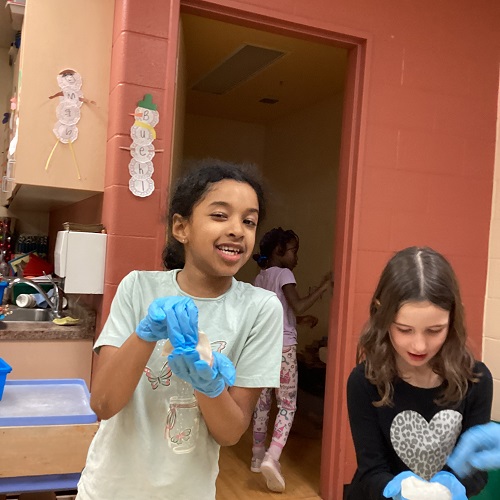
The series of activities around the Lunar New Year helped the children engage in cultural studies and strengthened various essential abilities. They practiced their problem solving and helping skills in attempting new food, and had opportunities for building their resilience and confidence after successfully conquering difficulties. We also created a sense of belonging for all in the classroom, which is our most important takeaway.